



Relationships between older women and younger men have become noticeably more visible in recent years, but their growth is often explained too narrowly. Popular narratives still reduce such connections to physical attraction or novelty, ignoring the deeper social and emotional factors that support them. In reality, older women younger men dating reflects broader changes in how people approach relationships, independence, and emotional fulfillment.
Older Women Younger Men Dating Explained
Many women today reach emotional stability, financial independence, and clarity about their needs earlier or more confidently than in previous generations. This changes partner selection logic. Instead of prioritizing age-based expectations, attention shifts toward emotional compatibility, communication style, and shared outlook on life.
▪️ Emotional openness also plays a role. Younger men in these relationships are often more willing to communicate feelings, discuss expectations, and engage in emotional dialogue without rigid role assumptions. This dynamic can feel refreshing compared to traditional dating scripts that rely on power balance or emotional distance.
▪️ Another reason these relationships grow is reduced pressure around timelines. Older women are often less focused on external validation or social approval. This allows connections to develop at a pace shaped by mutual comfort rather than obligation. Younger partners, in turn, may experience these relationships as calmer and more emotionally grounded.
▪️Digital dating environments contribute as well. On a serious singles service, matching is often based on intention and compatibility rather than age proximity. This creates space for connections that might not form in traditional social settings.
Taken together, these factors show that older women younger men dating is not a trend driven by surface attraction alone. It reflects evolving attitudes toward emotional maturity, independence, and relationship choice — setting the foundation for dynamics that are intentional rather than accidental.

Psychology of Age Gap Dating
The psychology of age gap dating is rooted less in age itself and more in emotional needs, readiness, and perception of partnership. Attraction in such relationships often forms where psychological traits complement each other rather than mirror each other.
Confidence plays a central role. Older women frequently bring emotional self-awareness and stability, which reduces ambiguity in communication. This clarity can feel grounding and attractive, especially for partners who value openness over traditional role expectations. Emotional maturity, rather than age parity, becomes the key factor shaping connection quality.
Mutual curiosity also contributes. Differences in life experience can create a sense of expansion rather than imbalance when both partners approach the relationship as equals. Psychological attraction grows through interest in perspective, mindset, and emotional presence rather than novelty alone.
Importantly, sustainable age gap relationships depend on aligned motivation. When both partners seek companionship, growth, and emotional connection — rather than validation or escape — psychological balance is easier to maintain. In this context, age difference becomes a secondary variable, shaped by how individuals regulate emotions, handle conflict, and communicate needs.
Read also: Age Gap Relationships: Social Perception Versus Real Experience.
Dynamics of Cougar Relationships
The dynamics of cougar relationships are often misunderstood because they are viewed through stereotypes rather than everyday interaction. In practice, these relationships tend to function through clarity and intentional communication instead of rigid role expectations.
Key dynamics commonly observed include:
- Clearer communication norms. Expectations, boundaries, and intentions are often discussed openly. This reduces ambiguity and minimizes emotional guessing, which supports stability from early stages.
- Flexible role distribution. Leadership, initiative, and emotional responsibility shift depending on context rather than age or gender. Roles are negotiated through interaction instead of assumed.
- Defined expectations from the start. Older women frequently enter these relationships with a clear understanding of what they want and what they do not. This clarity lowers uncertainty and creates a more predictable emotional environment.
- Adaptability and openness from younger partners. Younger men often contribute flexibility, curiosity, and willingness to adjust. This balance supports mutual growth rather than hierarchy.
- Transparent decision-making. Conversations about pacing, exclusivity, and emotional needs tend to occur earlier, not due to pressure, but because clarity is valued. This reduces misalignment later on.
- Negotiated structure rather than scripts. Instead of following predefined dating roles, these relationships develop through mutual negotiation. This encourages accountability, respect, and conscious participation.
Together, these dynamics make cougar relationships more intentional and emotionally regulated. Rather than being reactive or performative, the connection is shaped through awareness, communication, and shared responsibility.
Older Women Dating Mindset
The older women dating mindset is shaped by self-sufficiency and emotional clarity. Many women choosing younger partners do so without the pressure to conform to external expectations. This allows dating decisions to be guided by compatibility rather than social validation.
Clear boundaries are central. Emotional availability does not imply emotional dependency. Older women often value independence within connection, which influences how relationships are structured and maintained. This mindset prioritizes quality interaction over symbolic milestones.
Experience also informs selectivity. Rather than focusing on potential, attention shifts toward present behavior and emotional consistency. This reduces tolerance for ambiguity and increases demand for honest communication.
On platforms featuring European women authentic profiles, this mindset often translates into relationships built on transparency, mutual respect, and realistic expectations.
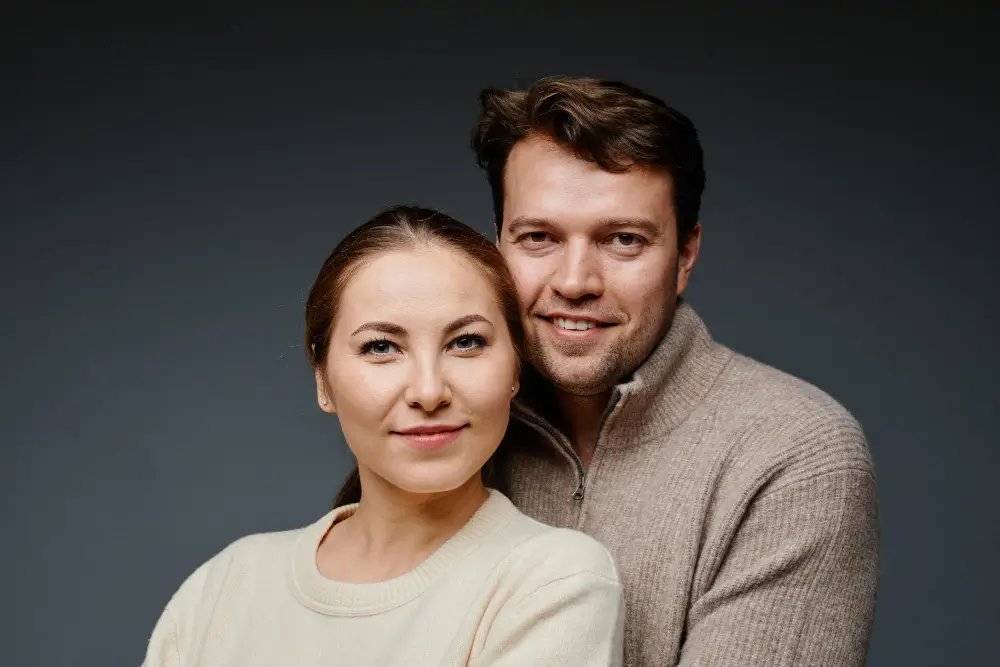
Younger Men Dating Older Women
Younger men dating older women are often drawn to emotional steadiness and communicative openness. These relationships may feel less performative and more grounded, especially when compared to dating environments driven by competition or unclear intent.
Emotional predictability is a key attraction factor. Older partners often articulate needs directly, reducing uncertainty. This clarity allows younger men to engage without constant self-monitoring or guessing.
Such relationships also offer space for emotional growth. Exposure to confident communication and established boundaries can encourage greater emotional responsibility and self-awareness.
Rather than power imbalance, many of these relationships are experienced as emotionally equal, shaped by choice rather than dependency.
Relationship Dynamics Age Gap in Practice
In daily life, relationship dynamics age gap become visible through routines, communication habits, and conflict resolution. Differences in lifestyle or energy levels may appear, but they rarely define the relationship on their own.
Potential tension points include:
- differing social rhythms
- external judgment or family expectations
- contrasting long-term timelines
These challenges are manageable when addressed proactively. Open discussion and emotional flexibility help prevent small differences from escalating into core issues. Practical success depends on adaptability. When both partners approach differences as negotiable rather than fixed, emotional balance is easier to sustain.
Read also: How to Recognize Genuine Love Versus Emotional Dependence.

Dating Older Women Explained Realistically
Dating older women explained realistically requires moving beyond fantasy or fear-based narratives. These relationships are neither shortcuts to emotional security nor inherently unstable. They function like any other partnership — through communication, respect, and shared intention.
Realistic expectations include:
- emotional clarity instead of emotional caretaking
- independence alongside connection
- mutual responsibility for relationship health
When approached consciously, dating older women offers opportunities for stable, intentional connection. Age difference does not define success; emotional alignment does.
Was the guidance above practical and grounded in real-life dynamics? Subscribe to the relationship development insights section to continue refining your standards and expectations. Regular reading reduces impulsive decisions. Reduced impulsivity leads to better matches. When you are ready to take the next step, start on the marriage-driven dating network and begin your search with confidence.
How has the social landscape shifted, and why have relationships with older women become more prevalent in 2026?
Historically, unions where the woman is older than her partner faced much harsher stigma than couples with the reverse age gap. However, by 2026, a tectonic shift in perception has occurred, driven by changing economic and gender roles. Women are increasingly achieving financial independence and career peaks later in life, which nullifies the traditional requirement for a partner to be the sole "provider." Now, the emphasis has shifted toward emotional vitality and lifestyle alignment. Psychologically, modern society is moving away from the "biological imperative"—where a woman's value was determined solely by her fertility—toward the concept of self-actualization.
Younger men, raised in more egalitarian environments, increasingly find the confidence, stability, and established identity of mature women attractive. In these relationships, the man is not looking for a "resource" but for a partnership with someone who knows exactly what they want from life and is not prone to the manipulations or emotional games often characteristic of early adulthood. This shift reflects a broader trend toward "individualized marriage," where personal happiness and psychological comfort are prioritized over adherence to outdated societal standards. As a result, age is ceasing to be the defining factor of compatibility, giving way to shared values and mutual respect.
What is the essence of the “Vitality-Stability Exchange” in the dynamics of such relationships?
The core psychological engine of these unions often involves a complementary exchange of different types of resources. The mature woman in this pair usually acts as a "stability anchor." She has already navigated crises of self-determination, built her boundaries, and possesses a high level of emotional intelligence. She is capable of providing deep support and understanding based on life experience. The younger man, in turn, often brings a "vitality catalyst" to the union—an openness to new experiences, a high energy level, and a less rigid outlook on life.
From an analytical psychology perspective, this exchange creates a unique synergy that balances the pair's energy. The younger partner's enthusiasm helps the older partner avoid the "routine trap" and emotional stagnation, while the older partner's wisdom helps the younger partner cope with life stressors more effectively and calmly. When this exchange is balanced, it generates a high level of relationship satisfaction that is independent of chronological age. It is important to understand that this is not exploitation but mutual enrichment: each partner receives what they lack for internal integrity. Such dynamics often make these couples more resilient to external crises, as their bond is built on complementing each other rather than on competition or attempts to remake the partner.
How do these couples handle the “Maturity Gap” versus the “Experience Gap”?
It is critically important to draw a line between psychological maturity and accumulated life experience. A common misconception states that the younger partner in such a pair is necessarily "immature." In practice, successful age-gap relationships are built on maturity symmetry. The younger man in such unions is often an "old soul"—someone whose psychological development is ahead of his passport age. Nevertheless, an "experience gap" remains a reality: one partner may have already raised children, bought a home, or suffered a major loss, while for the other, this is only a hypothetical future.
The dynamics thrive only when the woman respects the man's current stage of development without trying to become a "mentor" or "mother" to him. If the relationship turns into a "teacher-student" format, the romantic chemistry and erotic tension instantly vanish. Real success is achieved when both partners perceive each other as equals, recognizing that while one has seen more of life, they both currently stand on the same emotional level. This requires the woman to renounce condescension and the man to be ready to take on responsibility equal to his more experienced partner. When both participants realize the value of each other's unique experience without attempts at dominance, the age difference turns into a tool for expanding horizons for both.
What specific challenges do these couples face regarding long-term planning and fertility?
One of the most serious pressure factors in this dynamic is the question of time, especially in the context of childbearing and aging. If the younger partner wants biological children and the woman has already passed her reproductive age, it creates an "existential deadline" that peer couples do not face as acutely. In 2026, many solve this problem through early transparency in communication and alternative paths such as adoption or surrogacy. The absence of honest discussion about this issue at early stages often leads to deep crises in the future, so radical honesty becomes the key to the couple's survival.
Furthermore, there is a risk of "caregiving asymmetry." Statistically, a woman may face age-related health changes or the need for retirement significantly earlier than her partner. Real experience shows that successful couples in this dynamic live by the principle of "compressed time." They prioritize the quality of the current connection over anxious reflections on the distant future. They consciously choose to value the "here and now," which often makes their bond more intense and profound than that of couples who postpone life for later. This conscious approach to the finiteness of time and resources forces them to invest more effort into supporting each other, which paradoxically makes their union stronger and more mindful than many traditional marriages.
Why do younger men often report a higher level of “Emotional Safety” with older women?
Younger men often note that dating older women significantly reduces the "performance anxiety" that often accompanies relationships with peers. With a mature woman, there are usually fewer "hide-and-seek" games and more direct, constructive communication. Since the woman is already established as a person, the man does not feel the same pressure to constantly "impress" the partner with status, finances, or artificial masculinity. Instead, he can afford to be authentic, show vulnerability, and not fear judgment for temporary failures.
This creates an atmosphere of high psychological safety. The woman's self-confidence acts as a buffer against the insecurity characteristic of early dating stages. For the man, this opens a shortcut to deep intimacy and emotional trust. The relationship becomes a "secure base" from which both partners can grow and develop. This phenomenon proves that when an emotional match is found, the numbers on a birth certificate become secondary to the quality of the connection at the soul level. In such an environment, the man matures emotionally faster, and the woman receives a space where she is valued for her inner depth, rather than just for meeting external beauty standards, which strengthens the foundation of the relationship for years to come.
Maria is a writer who specializes in couples counseling and encourages people to become more intimate with one another. If you come across informative articles with personal viewpoints or research-based pieces that highlight the stages of creating healthy relationships, these pieces are probably written by Maria. The author emphasizes the importance of self-growth before seeking a romantic partner.