


In our ever-changing world, we are becoming increasingly open to unconventional relationship formulas – open relationships, separated marriages, or even lifelong singleness. We are also likely to see an increase in micro-cheating.
Trust in a couple is the force that drives relationships. Its absence may negatively affect the emotional intimacy of partners, cause quarrels, jealousy, and ultimately lead to separation. Moreover, people who do not trust their partner are focused on constantly checking their feelings; they have high anxiety and end up being victims of the relationship.
What is micro cheating? This is a concept that applies to partners when they commit actions that make their significant other doubt their fidelity to them. This behavior is unacceptable in a couple; it could be flirting correspondence with someone, writing comments on social networks, liking, and so on. Of course, this is a problem that causes negative emotions in the victim and slowly undermines the closeness in the couple, which can soon lead to a breakup. 💔
It is necessary to create impeccable trust between partners to build strong, long-term relationships. This is the basis for their union: with complete trust, the couple will not have misunderstandings, quarrels, and so on. Is micro cheating okay long term? Of course, not at all. Continue reading this guide to find out how to save your relationship from this problem.
😼 What is Considered Micro-Cheating?
First, you need to understand the difference between simple betrayal and micro cheating. Full-fledged infidelity is when a partner has close physical or emotional contact with other people. For example, flirting, intimacy, or an affair can be considered cheating.
Micro cheating is a kind of emotional deception that has not yet led to sad actions, but if you ignore it, the problem will develop and lead to either cheating or a break in the relationship. It is a series of small actions that a person takes when they are emotionally or physically focused on someone outside of their current relationship.
Read also: How to Find Your Soulmate.
An example of micro-cheating from woman’s side would be downloading a dating app even though the woman is in a relationship and has no intention of dating anyone. Micro cheating examples could also be any excessive dedication of attention to a stranger, deliberately hiding messages, friendship communication, etc. from one’s significant other. We won’t give 33 signs of micro cheating, because it makes no sense. You can see the main signs of experiencing micro-cheating in a relationship below.
🧡 She shows interest in others
These actions may be innocent. On the surface, this may seem like simply looking at another man’s profile photos, looking back at holiday photos of a past relationship, or talking and reminiscing about it. If the girl is too interested in this, pay attention.
🙅🏻♂️ She suddenly made friends with men
Such friendship may appear under the pretext of selfish goals. For example, she needed to call a plumber or take a driving lesson with an instructor, which became the basis for their friendship. But remember, a woman in love will not allow anyone to get close to her, even within the distance of friendship.
📱 She shares her phone number with strangers
She may do this supposedly just in case, but there is no excuse for such behavior. If you notice that she often gets calls from unfamiliar numbers or receives a lot of strange SMSes, then perhaps the girl is hiding something from you. This is one of the signs of micro-cheating.
🗣 She hides her relationship status
If a girl resists telling others that she is in a relationship, then it is also a red flag. In this way, she does not want to scare away all the alternative options of her suitors. If you notice something strange in her behavior, it is most likely considered micro-cheating.
🔎 She doesn’t close her profile on dating sites
Does her dating profile remain open? This means that the girl does not delete her account for a reason, she is looking for variants of partners better than you. This can well be called micro-cheating, and you should think about continuing such a relationship.
Read also: Useful Guide for Modern Dating.
😢 Why Does Micro-Cheating Hurt So Much?
Microcheating in a relationship can greatly hurt a man who has always trusted and been faithful to his girlfriend. This can be so hurtful that you may decide to end the relationship permanently. But you shouldn’t give in to emotions and act rashly.
There are many reasons why being micro-cheated by your partner can make you sad. One of them is the feeling that you have been betrayed, and now you no longer know whether you can trust your partner. At first, your woman was everything to you, and you assumed that she would never do this to you. In the end, girl’s behavior makes you doubt her feelings. Perhaps you think that her intentions towards you are not serious. These things may be so offensive.
❓ What to Do If You Face a Micro Cheating?
Like “full” infidelity, micro-infidelity can affect the well-being, safety, and level of trust one half of a couple has in the other. That is why you need to learn to cope with the situation so that it becomes acceptable and satisfies both partners.
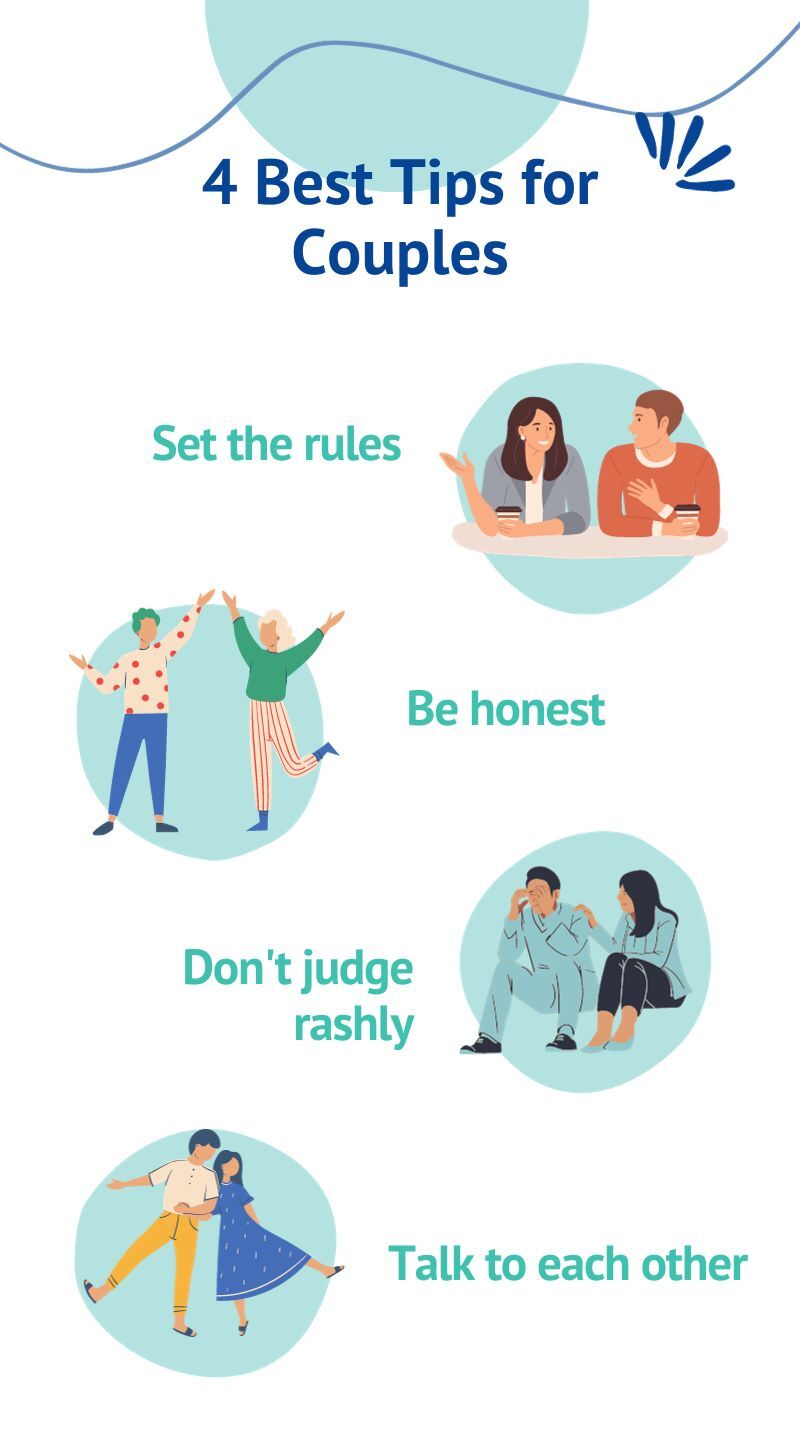
1️⃣ Set the rules. It is very important for the relationship to “work”, to avoid misunderstandings, and to set clear boundaries or rules: what is allowed, what is not, and what is considered cheating on each other. The most important thing is to strictly follow these rules.
2️⃣ Be honest. Good relationships need honesty in the right dose. As a couple, you should speak freely, and talk about your tastes, what you don’t like, doubts, insecurities, and what you consider cheating. Transparency prevents suspicions from forming that someone is hiding something. On the other hand, of course, every person has the right to privacy and to keep something secret. But not when it can negatively affect the relationship. It is necessary to find a balance, and this is only possible thanks to agreements.
3️⃣ Don’t judge rashly. There is no place for impulsiveness in a situation of micro-cheating. It is very important to think a little before doing anything or making decisions. At the same time, think about what your partner will say about this, and how it might affect you. Determine whether there is cheating from the girl’s side, and look at the situation from her point of view.
4️⃣ Talk to each other. Communication is one of the foundations of any relationship, as it is necessary for rapprochement and understanding of what people are or are not ready to accept. Communication is necessary to establish boundaries and rules, promote healthy relaxation, avoid unnecessary arguments, and ensure that no one feels ignored, deceived, or alienated.
💬 Summing – up: Should I Stay with a Cheater?
Understanding and addressing behavior that borders on infidelity requires recognizing that there is no one-size-fits-all solution. The right decision is unique to you and your partner. If you feel that someone is keeping secrets that make you feel betrayed, engage in an open dialogue with your partner. If separation is inevitable, don’t regret it. You can always meet a partner who is truly worthy of you. For example, on Victoriyaclub.com, there are many beautiful girls who are ready to remain faithful to their partners no matter what.
Did this publication answer the questions that brought you here? Follow updates in the relationship advice articles section to keep learning practical relationship psychology and real-world dating strategy. New materials help refine standards and clarify intentions. Staying subscribed keeps the progress continuous. When the moment comes to act, create a profile on the trusted matchmaking platform and start searching for a life partner today.
What is micro-cheating and why has it become a pressing issue in 2026?
Micro-cheating represents a set of actions that exist in a "gray zone" between fidelity and direct physical infidelity. It is a psychological phenomenon involving secretive digital or emotional activity that undermines the trust and exclusivity of a relationship. In 2026, the relevance of this issue has surged due to the pervasive integration of social networks and messengers into daily life, which has blurred the clear lines between innocent friendly communication and emotional betrayal. Micro-cheating does not involve physical contact, but it directs a subject's erotic or romantic energy toward a third party, creating an emotional deficit within the primary couple.
The main complexity of micro-cheating lies in its subjectivity and the possibility of double interpretation. What one partner considers an innocent "like" or a polite response to a compliment, the other may perceive as an act of betrayal. The lack of a unified standard for digital behavior compels couples in 2026 to renegotiate their terms of exclusivity. Micro-cheating is dangerous because it gradually erodes the foundation of security in a relationship, creating fertile ground for more serious conflicts. It often serves as an indicator of dissatisfaction with the current union, where one partner seeks validation of their attractiveness and emotional replenishment on the side while maintaining the appearance of loyalty.
What are the 5 key signs that indicate micro-cheating is occurring in a relationship?
Identifying micro-cheating requires a careful analysis of changes in a partner's behavior and their interaction with digital devices. These markers are often masked as ordinary social activity; however, when they manifest systematically, they testify to a breach of emotional fidelity.
To identify hidden patterns, one should pay attention to the following list of signs:
- Digital secrecy: the partner changes passwords, places the phone face down, or abruptly stops messaging when another person enters the room;
- Active attention to "exes": systematic monitoring of former partners' pages, liking their old photos, or maintaining ambiguous dialogues under the guise of friendship;
- Emotional outsourcing: discussing deeply personal problems or successes with a third party before sharing them with the permanent partner;
- Inside jokes and hidden codes: the existence of a special communication style or specific humor with someone in their circle that is intentionally concealed from the partner;
- "Digital flirting" and ambiguous reactions: regularly leaving complimentary comments or emoji reactions on the content of specific individuals that carry subtexts of sexual interest.
The presence of a single sign may be a coincidence; however, a combination of several points indicates a developed behavioral model. In 2026, psychologists emphasize that the key criterion here is the intention to hide the interaction. If a subject understands that their activity would upset their partner and consciously chooses secrecy, it is a classic case of micro-cheating. It is this element of mystery that transforms ordinary social interaction into a tool for destroying trust within a pair.
How does micro-cheating affect the neurobiology of attachment and a partner’s self-esteem?
Micro-cheating triggers mechanisms of chronic stress and anxiety in the partner's psyche. When one person in a pair begins to notice double standards in the other's behavior, their brain shifts into a state of hyper-vigilance. This leads to the release of cortisol and adrenaline, which hinders the formation of the oxytocin bond—the hormone of trust and attachment. Constant doubt about one's value and comparison with "third parties" from the partner's digital space strike a blow to self-esteem, causing feelings of inadequacy and social isolation within the relationship.
From a neurobiological standpoint, micro-cheating creates an effect of "intermittent reinforcement." The partner occasionally receives confirmation of love but then encounters coldness and secrecy, which forms an addictive, anxious attachment. The victim of micro-cheating begins to seek confirmation of their paranoia, leading to personality degradation and a loss of autonomy. Over time, this destroys the capacity for genuine intimacy, as the emotional space of the couple becomes "contaminated" by the shadows of outsiders. In 2026, therapists increasingly work with the consequences of precisely these micro-traumas, which can be comparable in intensity to the aftermath of discovered physical infidelity.
Where is the line between healthy friendship and emotional micro-cheating?
The distinction between friendship and micro-cheating in 2026 is built on the principles of transparency and the direction of energy. Healthy friendship does not require concealing the fact of communication or the content of dialogues from a partner. A friend is a person whose image and influence are known within the couple and do not cause discomfort for either participant. Micro-cheating, however, always implies the presence of erotic tension or a romantic flair that the subject carefully guards from their companion's eyes. If communication with a "friend" involves topics the partner considers forbidden, or if this communication replaces intimacy in the pair, the boundary has been crossed.
A critical criterion is also the reaction to a partner's request to stop or limit such communication. In healthy relationships, a request for boundaries is met with understanding and a readiness for compromise. In cases of micro-cheating, the subject often resorts to gaslighting, accusing the partner of "excessive suspicion," "insecurity," or "total control." This behavior is aimed at protecting their source of dopamine on the side. Thus, true friendship strengthens the couple's social network, while micro-cheating creates a parallel reality that inevitably conflicts with the interests of the primary union.
What is the strategy for overcoming the consequences of micro-cheating and restoring trust?
Restoring a relationship after identifying micro-cheating requires a high degree of awareness and a readiness for radical honesty from both partners. The first step is acknowledging the violation of boundaries without attempting to justify actions as "innocent." In 2026, couples utilize the practice of "full digital transparency" during a transition period, allowing the injured party to regain a sense of control over the situation. The subject who engaged in micro-cheating must voluntarily cease contacts that caused suspicion and analyze the reasons for their behavior: whether it was a need for validation or an attempt to escape problems within the pair.
Further work involves revising the exclusivity agreement and establishing new, clear rules for digital behavior. This includes discussing what is considered acceptable on social media and what is not. The healing process requires time and patience; the partner whose trust was undermined has the right to express their feelings and receive reassurances of fidelity. Only through consistent adherence to new rules and returning the emotional focus to the inside of the pair is the restoration of the oxytocin bond possible. If both participants are willing to work on the underlying cause of the micro-cheating, the union can become stronger and more conscious than it was before the incident.