


Dating has always reflected the social norms and expectations of its time. As conversations around inclusion and accessibility become more visible, dating with disabilities is increasingly recognized as a natural and important part of modern relationship culture. Yet despite growing awareness, misconceptions and stereotypes continue to shape how people perceive romantic connections involving disability.
Dating with disabilities is not defined by limitation. It is shaped by individuality, communication, and shared intention — just like any other form of dating. What often differs is not the desire for connection, but the assumptions placed on it. Understanding these expectations, addressing real challenges, and focusing on authentic emotional connection allows relationships to develop on equal and respectful terms.
Dating with Disabilities Explained
Dating with disabilities in today’s world is not a separate category of romance — it is part of the broader landscape of modern relationships. However, expectations around dating with disabilities are often shaped by stereotypes. Some assume that people with disabilities are not interested in relationships, while others mistakenly believe that such connections are defined only by limitation or dependency.
In reality, dating with disabilities centers on the same foundations as any other relationship: emotional compatibility, shared values, attraction, and mutual respect. What differs is the level of awareness and openness required to navigate individual needs.
A respectful approach means seeing the person first, not the disability. It also means being willing to ask questions, listen without assumptions, and communicate honestly. Some individuals prefer structured environments such as an exclusive dating service, where shared intentions and clarity help reduce uncertainty. Regardless of the platform, success depends on openness rather than preconceived narratives.
Relationship Challenges Disabilities Can Create
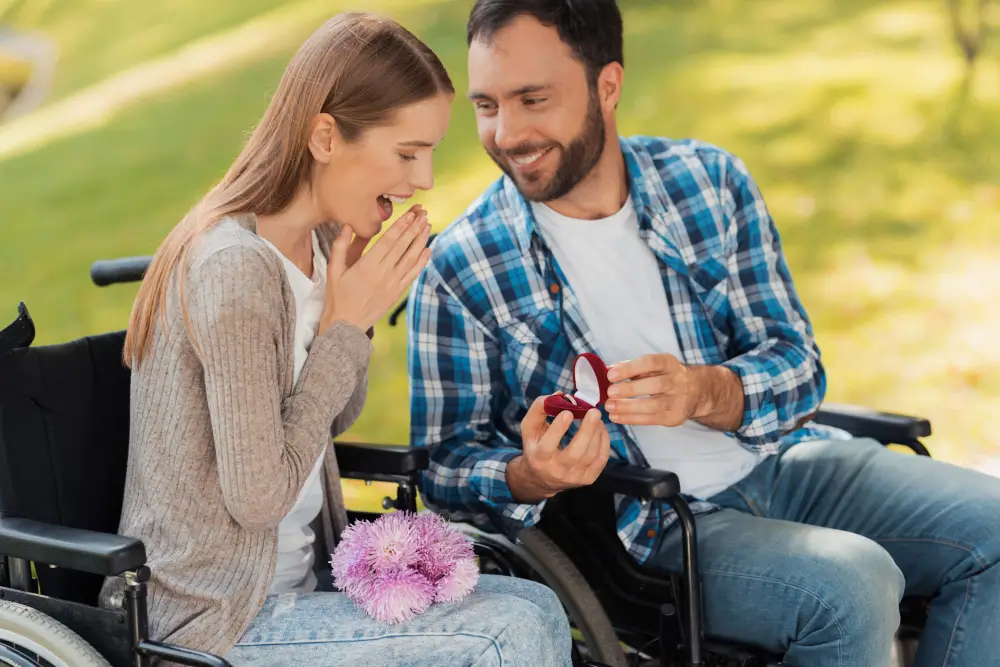
Relationship challenges disabilities may create are often less about the disability itself and more about external pressures. Social attitudes, accessibility barriers, and misunderstandings can introduce tension into otherwise healthy connections.
Practical considerations — such as mobility limitations, medical routines, or environmental accessibility — may require planning. But these factors do not define the relationship. The real difficulty often lies in how society responds to disability.
Open communication plays a critical role in reducing stress. When partners openly discuss expectations, needs, and boundaries, relationship challenges disabilities may present become manageable rather than overwhelming. Transparency replaces guesswork, and shared problem-solving strengthens the bond.
Read also: Body Language Cues that Signal Attraction and Interest.
Love and Disabilities in Real Relationships
Love and disabilities are not opposing concepts. Emotional intimacy develops through vulnerability, trust, and consistent support — qualities that are not dependent on physical condition. Attraction and long-term commitment are rooted in compatibility, shared values, and emotional maturity rather than in physical assumptions.
In many relationships involving disability, communication becomes more intentional. Partners often prioritize clarity because open dialogue reduces uncertainty and prevents misunderstanding. Conversations about accessibility, daily routines, energy levels, or personal boundaries help both individuals feel secure. Rather than limiting connection, this transparency often strengthens it.
Love and disabilities coexist in everyday ways. Healthy relationships are typically built on:
- open and honest communication
- mutual respect for autonomy
- emotional reassurance and reliability
- shared goals and future planning
- practical cooperation when challenges arise
These elements are not unique to disability — they are universal foundations of strong partnerships.
Practical adjustments, such as planning accessible activities or coordinating schedules, may be part of the dynamic. However, they do not define the emotional core of the relationship. They simply reflect attentiveness and shared responsibility.
Trust develops gradually. Emotional safety grows when both partners acknowledge reality without exaggerating or minimizing it. Disability becomes one aspect of a person’s identity, not the central narrative of the connection. Healthy partnerships maintain balance: support does not replace independence, and assistance does not undermine equality.
Read also: First Date Ideas That Reduce Tension and Encourage Connection.
Ultimately, the presence of a disability does not reduce the capacity for affection, attraction, or commitment. Real relationships thrive through empathy, stability, and shared experience. Love grows not through physical perfection, but through authenticity and consistent care.
Dating Expectations for Disabled People
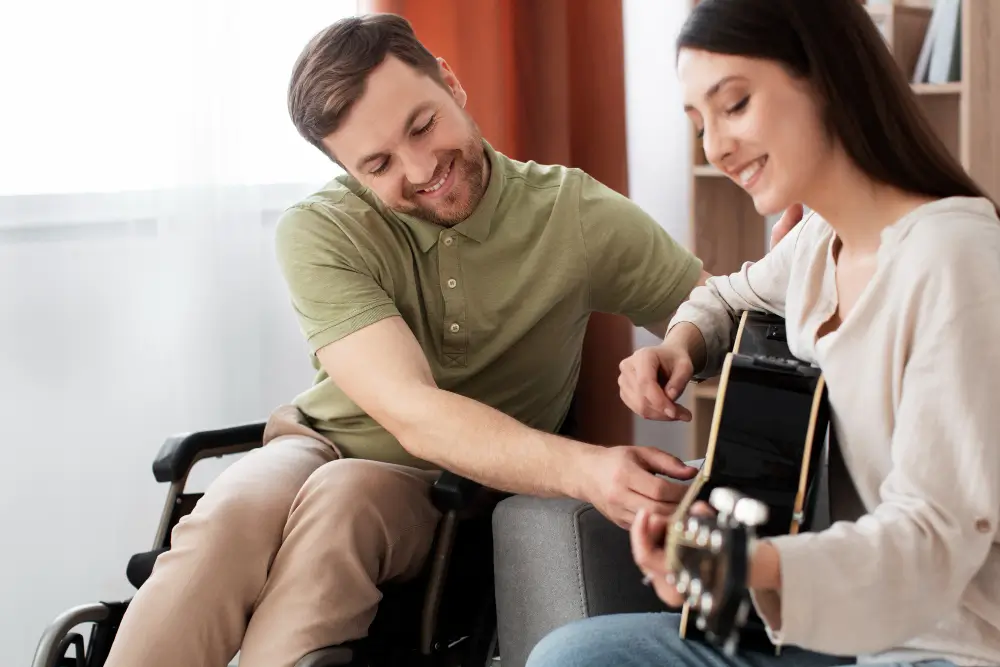
Dating expectations disabled people hold — and those their partners may have — are shaped by personal history and cultural messaging. Some individuals may worry about rejection or being misunderstood. Others seek direct, transparent conversations from the beginning.
Clarity of intention is essential. Whether someone is looking for companionship, long-term commitment, or international partnership, aligning expectations early prevents disappointment later.
On global platforms, including formats similar to a European women dating service, clear communication about goals and boundaries becomes especially important. Dating expectations disabled people express openly tend to create stronger foundations because both partners understand what they are building together.
Disability and Intimacy Explained
Disability and intimacy are often misunderstood due to cultural taboos. Intimacy is not limited to physical interaction; it includes emotional safety, trust, and mutual comfort.
Building intimacy requires patience and consent. Conversations about comfort levels, boundaries, and preferences allow both partners to feel secure. Emotional closeness frequently precedes physical closeness, reinforcing stability within the relationship.
Disability and intimacy intersect in deeply personal ways. What matters most is not conformity to a standard narrative of romance, but the authenticity of connection and the presence of mutual respect.
Dating Inclusivity and Mutual Respect
Dating inclusivity reflects the maturity of modern relationship culture. It involves recognizing diversity in experiences, bodies, and abilities without assigning hierarchy or limitation.
Mutual respect emerges from active listening, empathy, and equality. When both partners approach dating as equals, power imbalances decrease and emotional safety increases.
Dating inclusivity does not require special treatment — it requires fairness. Respectful communication and acceptance create healthier dynamics for everyone involved.
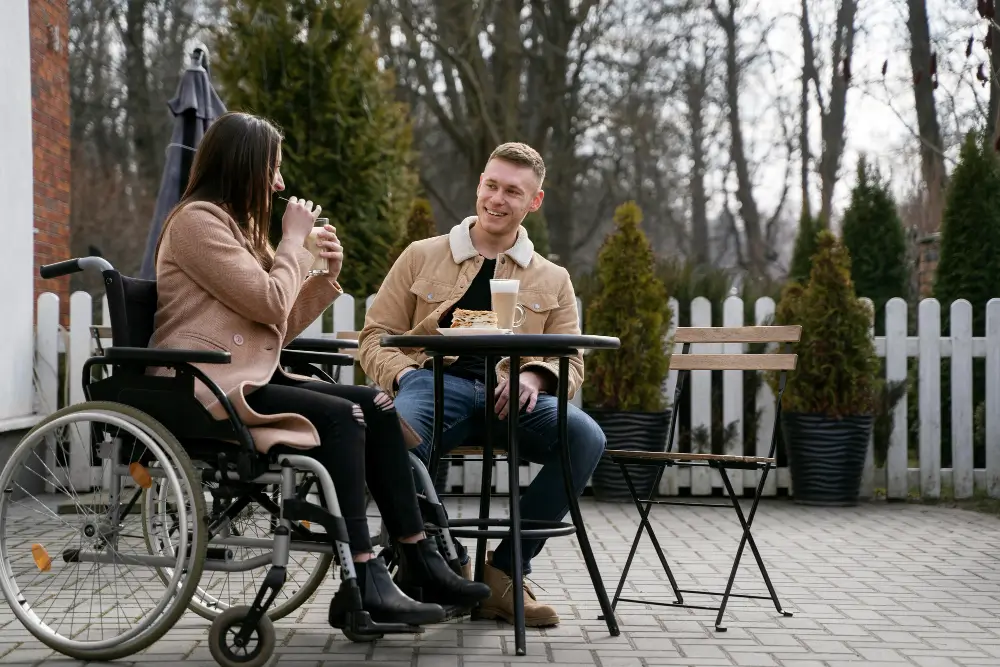
Relationships with Disabilities Explained Realistically
Love and disabilities are not opposing concepts. Emotional intimacy develops through vulnerability, trust, and consistent support — qualities that are not dependent on physical condition. Attraction, attachment, and long-term commitment arise from compatibility and shared values rather than from physical assumptions.
In many relationships involving disability, communication becomes more intentional. Partners often prioritize clarity because open dialogue reduces uncertainty and prevents misunderstandings. Conversations about accessibility, health routines, emotional comfort, and future plans create transparency. Rather than limiting connection, this openness often deepens emotional security.
Love and disabilities coexist in everyday ways. Strong partnerships are typically built on:
- open and honest communication
- respect for independence and personal boundaries
- emotional reassurance and reliability
- shared goals and long-term vision
- collaborative problem-solving
These foundations are not unique to disability — they define healthy relationships in general. What may differ is the level of awareness partners bring into the dynamic. Adjustments such as planning accessible activities or coordinating around specific needs become expressions of care rather than obstacles.
Trust develops gradually through consistent behavior. Emotional safety strengthens when both individuals acknowledge disability as part of life without allowing it to overshadow identity. A disability does not replace personality, humor, ambition, or emotional depth. It is one element within a broader human experience.
Ultimately, love and disabilities intersect in realistic, grounded ways. Support does not eliminate autonomy, and closeness does not depend on physical perfection. Real relationships thrive through empathy, equality, and shared resilience. Emotional connection remains the central force — built not on limitation, but on understanding and mutual respect.
Conclusion
Dating with disabilities becomes meaningful when it is approached without distortion, pity, or unrealistic idealization. Relationships are shaped by communication, shared values, emotional compatibility, and mutual respect — not by physical circumstances alone.
While external barriers and social assumptions may influence the experience, they do not determine its depth or potential. Clear expectations, honest dialogue, and emotional openness reduce tension and create space for genuine connection. Intimacy, trust, and partnership develop through consistency and understanding rather than through conformity to stereotypes.
Subscribe to updates in the serious partnership blog for new posts about loyalty, discipline, and emotional maturity. Fresh content helps refine relationship strategy. Strategy creates better outcomes. When you are ready to act, begin on the platform designed for lasting relationships and start building something stable.
How does the concept of “Radical Honesty” influence the disclosure process?
One of the most complex questions for individuals with disabilities is when and how to share information about their condition. In 2026, psychologists and inclusivity experts increasingly lean toward the concept of "Radical Honesty." This does not imply that you are obligated to post your medical records in a dating app bio, but it suggests an openness regarding how your disability affects your daily life and the logistics of dating. Disclosure serves as a vital "filter" that weeds out individuals who lack the empathy, emotional intelligence, or maturity required to build an inclusive and respectful relationship.
Analytically, honesty reduces the "cognitive load" on both partners. When information is provided transparently and at the right time, it removes the element of guesswork and potential awkwardness. The true meaning of disclosure is not about seeking sympathy or "warning" the other person; it is about establishing a foundation of trust. If a partner reacts with genuine curiosity and respect, it sets a solid groundwork for the future. If the information triggers fear or rejection, it allows you to avoid investing time in someone who isn't ready for the depth and understanding these unions necessitate.
Why is “Combating Infantilization” a key stage in building an equal connection?
People with disabilities frequently encounter infantilization—a phenomenon where society treats them as helpless, asexual, or childlike beings. In a romantic context, this manifests as overprotectiveness or the "heroization" of the partner without a disability (e.g., "You’re such a saint for dating them"). For a healthy connection to thrive, it is critical to establish a dynamic of equal partnership from the very beginning. The relationship must be built on a mutual exchange of values rather than a "rescuer and ward" dynamic.
The true meaning of overcoming this barrier lies in the recognition of autonomy. A high-quality partner understands that a disability is just one of many characteristics of a person’s identity, not the dominant factor that defines their capacity to love, support, or contribute to a relationship. This requires an ongoing, open dialogue about boundaries: identifying where help is appropriate and where it might infringe upon personal space and independence. When a couple finds this balance, the disability ceases to be an obstacle and becomes simply a part of the shared landscape they navigate together as peers.
How can “Love Languages” and dating logistics be adapted without losing romance?
Dating with a disability often requires more meticulous planning—from checking venue accessibility to managing "Spoon Theory" (energy levels). However, this planning should not stifle spontaneity. The mastery here lies in "Creative Adaptation." Instead of viewing limitations as problems, successful couples use them as opportunities to find unique and meaningful ways to connect. This might mean a picnic in a fully accessible park, a cozy night in with a curated tea tasting, or attending specialized inclusive events.
From an analytical standpoint, such adaptation deepens the emotional bond. When a partner without a disability takes an active role in logistics (without slipping into hyper-care), it is perceived as a powerful act of validation and care. It shifts the focus from physical activity to emotional resonance. In these relationships, the "love language" often gravitates toward "acts of service" and "quality time," making the connection more intentional and profound than that of couples who take the accessibility of the world for granted.
What role do “Internalized Stigma” and self-esteem play in finding a partner?
Often, the greatest barrier is not the reaction of others, but internalized stigma (internalized ableism). An individual with a disability may subconsciously feel "unworthy" of love or fear being a burden to a partner. This belief can prevent them from taking initiative or expressing attraction openly. Transitioning to a successful relationship begins with the radical acceptance of one's own value and the understanding that a disability does not make one a "defective" partner.
Psychological resilience in this context is a key factor of attractiveness. When a person confidently communicates their condition as an integrated part of their identity, it shifts how others perceive them. The true meaning of this stage is the integration of the disability into the overall "Self" concept. People are naturally drawn to those who are at peace with themselves. Healing from internalized stigma opens the door to partners who see the person first, viewing the disability as a context in which that person demonstrates unique strength and character.
How can couples handle social pressure and “uncomfortable questions” from others?
Couples where one or both partners have a disability inevitably face curiosity, prejudice, or tactless questions from family and the public. The true meaning of protecting a relationship under these conditions lies in creating a "United Front." Developing a joint strategy for responding to external irritants strengthens the union. This might involve using humor, calmly educating others, or setting firm boundaries (e.g., "We don't discuss our private life with strangers").
Analytically, external pressure is a factor that either erodes a couple or makes them invincible. Overcoming stereotypes together creates a "team effect." It is vital that both partners remain on the same side, supporting one another in situations where society displays a lack of tact. The ability to maintain focus on one's own feelings rather than the opinions of others is a hallmark of social maturity. Ultimately, it is the couple's ability to protect their unique reality that makes their bond truly resilient and long-lasting.
Robert Smith is a professional writer and relationship expert who has devoted his life path to giving advice to those seeking love outside their countries. Robert was able to combine his two passions—his love of writing and his talent for international love affairs. The author has developed his dating strategies based on his investigations into the international dating niche and his own experience.