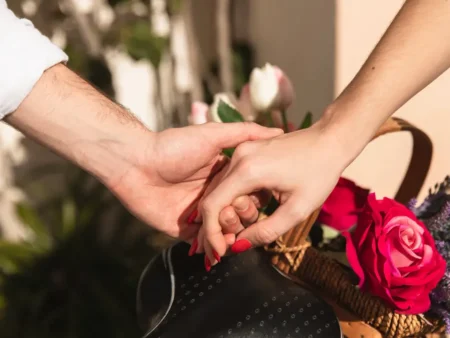



Everyone knows that international dating and relationships with foreign brides are all the rage these days. You see, if you peek at the statistics, there are even more international marriages happening. But there is one problem: some guys are worried about being someone’s convenient option or their personal “sugar daddy.” One-sided relationships are just like one-way mirrors. You see and feel everything, but the other person doesn’t. Here, I will disclose all the signs of a one-sided relationship to help you avoid heartache and show you one-sided relationship examples. Don’t miss out on love that transcends borders—read on! 💘💫
🤔 How do you Know if a Relationship is One Sided?
You’ve probably heard it a million times—building a brilliant relationship takes effort. Of course, some people dump all the hard work on their partners while they’re chilling with the “whatever will be, will be” attitude. Here is the unpleasant moment: It’s often people who put in all the effort who end up heartbroken. So, I’m here to clue you in on the seven signs of a one sided relationship.
1. You’re always apologizing 🥹
If you’re in a situation where you’re always the one saying “sorry”, it’s time to raise an eyebrow. During arguments, your beloved is like a pro at twisting things and making you a bad guy. You’re stuck in this cycle of asking for forgiveness just to keep the peace. It’s not cool to keep swallowing your pride and self-esteem in order to keep her pleased. 🚩🙅♂️ You deserve all the respect and happiness too!
2. This relationship is draining your energy 😬
If you’re the only one putting in the effort in a relationship, it’s sapping all your energy. You feel a big rain cloud over your heart all the time. 🌧️ If you find yourself in a situation where you’re committed and giving your best, but your partner is exploiting your kindness, it creates a negative atmosphere. I seriously hope you’re not dealing with this! But if you are, it’s time to wave “goodbye” without any doubts! Run away like lightning, and don’t ever glance back! 🏃♂️💨
3. You are responsible for making plans 🗓️
Have you noticed that you’re the one person who always takes the initiative to plan things for your couple? Weekend out of town, evening date, or just relaxed walking in the park – you organize all of these. Only YOU can make time for your special someone and even rearrange your schedule! I understand that all this is upsetting and does not seem fair at all. So, if your beloved one is not really getting involved in planning anything, it might be a clear sign that things are a bit one-sided.
Read also: Getting Ghosted: Meaning, Signs, and Ways to Cope.

4. Your partner doesn’t share anything with you 🤐
You’re in the dark about what’s happening at their job, their hangouts with friends, the aspirations that are on their mind, or what they’re dreaming about. On your end, you’re an open book, hoping for the same honesty and trust in return. But sometimes, it’s so weird. You’re there for your beloved when they need you, but when you want to share your own problems and thoughts, they’re like, “Meh, not into it.”
5. You have different types of attachment 😰
Now, time for a little bit of psychology! Many psychotherapists say that parents who have been too strict and demanding can cause an avoidant attachment style. This shows that you have difficulty making contacts and would usually prefer to avoid social situations, including those involving your relationships. There is, however, one more scenario: if your parents were cold and unfriendly to you as a child, you may grow up with an anxious attachment style. In this case, you’ll just always be worried that something’s off in your relationships and afraid to be too open. People with an anxious attachment style are generally scared of being hurt. To others, this might make it seem like you don’t care about anything. Because of this, when two people have distinct attachment types, it can be difficult for a relationship to feel healthy.
6. In a relationship, your partner’s needs come first; your needs do not 🏆
It’s crucial to be able to hear and truly listen to your better half when they share their needs and desires. However, it should be bidirectional and not just work in one direction. It’s not nice when our needs and desires as individuals are neglected! This occurs when your spouse doesn’t genuinely care about your feelings, only her own. But really, when only one person feels heard and understood, is it possible to maintain a happy, healthy relationship? Not really!
7. You justify your partner’s behavior to loved ones on a regular basis 🤯
Occasionally, your loved ones and friends question your chosen one’s intentions toward you…or not occasionally. That’s why you make excuses every time. “She didn’t mean it” or “He’s just having a tough time” are examples of phrases you can use. If so, this is not a positive indication! Your family members worry that if your partner is treating you or the people around you poorly, it’ll reflect badly on your life. Remember, your partner shouldn’t need your explanation for her behavior. In every other case, it’s a sign of a one-sided relationship.
Read also: Dating Etiquette: Facts that You Might Not Have Known.

🤫 Is it Still Love if it is One Sided?
You give the relationship your all, working hard to ensure your partner is happy in all circumstances. But regularly, you get the impression that no one values you or that you are treated with apathy. This raises an important question: Is there any love left? Is there still a chance for the two of you? It’s not always that simple, even though it could appear that a one-sided effort means the end of a relationship. It’s possible that your partner isn’t intentionally being cold or selfish; she might be unaware of how her behavior appears. Therefore, it’s worth engaging in an open conversation to explore if things can improve. But remember: if all attempts fail and there’s no way to mend the situation, you have every right to move on. To add, I have one wise saying for you: “One-sided love is a dance between hope and despair, a delicate balance of holding on and letting go”.
So, if you’re on the hunt for a genuinely happy relationship, you need that mutual love! This mutual love you can experience with foreign brides! The question immediately arises: “How to find foreign brides?” Check out the dating website, VictoriyaClub. This site has tons of single ladies from different nations, each with their own goals and dreams.
If you ask me: “Who are best foreign brides in the world?”, I’ll answer you: “Slavic brides!”. I’m pretty sure you can share some real, two-way love with them!
✍️ Final Word
In conclusion, it’s important to remember that every couple is unique, and their connections are too. If you ever find yourself questioning whether you’re the only one invested in your relationship, take a moment to reflect. Look for those red flags of a one-sided relationship we talked about. Even though this isn’t a good sign, you shouldn’t immediately jump to breaking up. It’s better to have an open conversation first and make sure those problems aren’t just temporary hiccups before making any final decisions. I hope that you will find the mutual love you both deserve.❣️
Was this publication useful in real life, not just interesting? Subscribe to the expert dating tips section to receive new practical guidance about serious dating and long-term partnership. Regular updates help you avoid common traps and act with confidence. A stable future is built through consistent, informed steps. When it’s time to move forward, start on the international marriage dating site and meet women ready for commitment.
Why do international relationships often transform into a one-sided model?
International unions in 2026 frequently encounter a phenomenon known as "functional asymmetry," where partners invest different resources and expect fundamentally different outcomes. One of the primary reasons for this one-sidedness is an underlying cognitive dissonance: one participant may be seeking deep emotional intimacy, while the other (the foreign bride) may be unconsciously or out of necessity focusing on a strategy of social migration and security. In an era of global instability, relationships often become instruments for improving one's quality of life, which automatically shifts the focus from partnership to the functional utilization of the other party's resources.
Furthermore, one-sidedness is fueled by the "exoticization effect." A Western partner may idealize a foreign bride, projecting traits that satisfy his personal deficits—such as submissiveness or traditionalism—without considering her actual personality. When the reality fails to match the image, a phase of disillusionment follows, but by that point, the relationship may already have a structure where one party constantly "gives" while the other merely "consumes." In 2026, psychologists emphasize that without a deep analysis of motivations on both sides during the early stages, the risk of building a union based on exploitation remains critically high.
What 5 markers indicate an imbalance and a purely pragmatic interest?
Timely recognition of signs that a relationship is developing according to a one-sided scenario allows one to avoid emotional exhaustion and financial loss. These markers are often hidden behind the veil of cultural differences, yet they possess a clear structure.
To verify the sincerity of a partner's intentions, the following aspects should be analyzed:
- Material dominance in communication: conversations regarding financial difficulties, gifts, or assistance prevail over discussions of personal qualities, shared interests, or plans for mutual emotional growth;
- Selective availability: the bride only initiates contact when she needs something or demonstrates activity exclusively in the context of solving her problems, ignoring the partner's emotional needs;
- Refusal of long-term planning without resource involvement: a reluctance to discuss a future that is not tied to visa issues, relocation, or major purchases, indicating a lack of interest in the individual as a person;
- Lack of integration into a social circle: the partner intentionally hides details of her real life, does not introduce family or friends, and maintains "sterile" communication to control the distance;
- Emotional coldness despite outward compliance: formally performing the role of the "ideal bride" without demonstrating genuine empathy, vulnerability, or a deep interest in the man's inner world.
The presence of several items from this list suggests that the relationship is transactional rather than a true union. In 2026, international dating etiquette prescribes an open discussion of expectations; however, if a partner systematically evades direct answers using "translation difficulties" as an excuse, it constitutes a serious "red flag." One-sidedness in such couples is often masked as cultural specificity, but at its core, it is always a form of emotional parasitism.
How do cultural stereotypes hinder an objective assessment of a partner?
Cultural stereotypes act as a powerful filter that distorts the perception of reality in international dating. Men often seek foreign brides based on myths regarding the "traditional values" of certain regions, which blinds them to the subject's actual behavioral patterns. The belief that a woman from another country is inherently more devoted or less demanding creates a false sense of security. In 2026, as borders and roles shift rapidly, relying on old templates becomes dangerous: a foreign bride may use these stereotypes as a mask to achieve her own objectives.
On the other hand, the bride herself may be held captive by stereotypes of the "wealthy and stable West," causing her to view the partner as a social elevator rather than a human being. This mutual objectification precludes the possibility of building trust. To avoid one-sidedness, it is necessary to perform a "deconstruction of the image": asking questions that go beyond cultural templates and observing the partner's reactions in situations that do not require financial investment. Only by stepping outside national clichés can one see the real person and assess their capacity for an equal contribution to the relationship.
What is the role of the “digital divide” and language barriers in creating an illusion of closeness?
In 2026, digital translation tools have become so sophisticated that they create a dangerous illusion of complete mutual understanding. Artificial intelligence smooths over rough edges, selects the right intonations, and hides a partner's lack of actual vocabulary. This leads to a situation where the relationship appears deep in the virtual space, but upon meeting in person, the couple faces a "semantic vacuum." One-sidedness manifests here as one partner (usually the one more heavily invested) constructing an image of the other in their mind, filling the gaps with their own fantasies and desires.
The language barrier is often used as a tool for manipulation: "misunderstanding" becomes a convenient excuse for failing to meet obligations or ignoring boundaries. To avoid this, it is recommended in 2026 to move from text-based communication to regular video calls using synchronous translation, but with a mandatory focus on non-verbal signals. If a bride appears deeply empathetic in writing but displays boredom or detachment on video, it is a direct sign that the digital communication is a staged process aimed at retaining a resource.
What behavioral strategy should be chosen to build an equal international union?
Building a healthy international relationship in 2026 requires a transition from a paternalistic model to a partnership model. This means that both participants must take responsibility for the development of the bond. A "reality check" strategy involves the gradual delegation of responsibility to the foreign bride: proposing to plan meetings together, sharing small organizational tasks, and observing her readiness to invest time and effort rather than just receiving them. Equality begins where both partners are willing to discuss difficulties and seek compromises that extend beyond material exchange.
To protect one's interests and maintain balance in a pair, it is recommended to adhere to the following principles:
- Establishing transparent financial boundaries at the early stages, excluding regular money transfers before a face-to-face meeting;
- Focusing on joint projects or hobbies that do not require material costs to verify emotional resonance;
- A mandatory study of the partner's cultural context and language to reduce dependence on intermediaries and translators;
- Organizing meetings in neutral territories where both partners are on equal footing;
- A readiness to terminate communication at the first sign of a consumerist attitude, even if significant resources have already been invested.
A relationship with a foreign bride can be deep and lasting only if it is built on the mutual recognition of each other's agency. In 2026, success in this field belongs to those who seek a person, not a "function." The ability to remain clear-headed in the presence of strong emotions is the only way to avoid the trap of one-sided relationships and find authentic intimacy that does not depend on national borders.